AI- Powered
Drug Discovery
From biological data to actionable drug-discovery insights.
BioNexus Discovery combines artificial intelligence, machine learning, chemoinformatics, molecular modeling, and computational analysis to accelerate research and support faster, evidence-informed drug discovery.
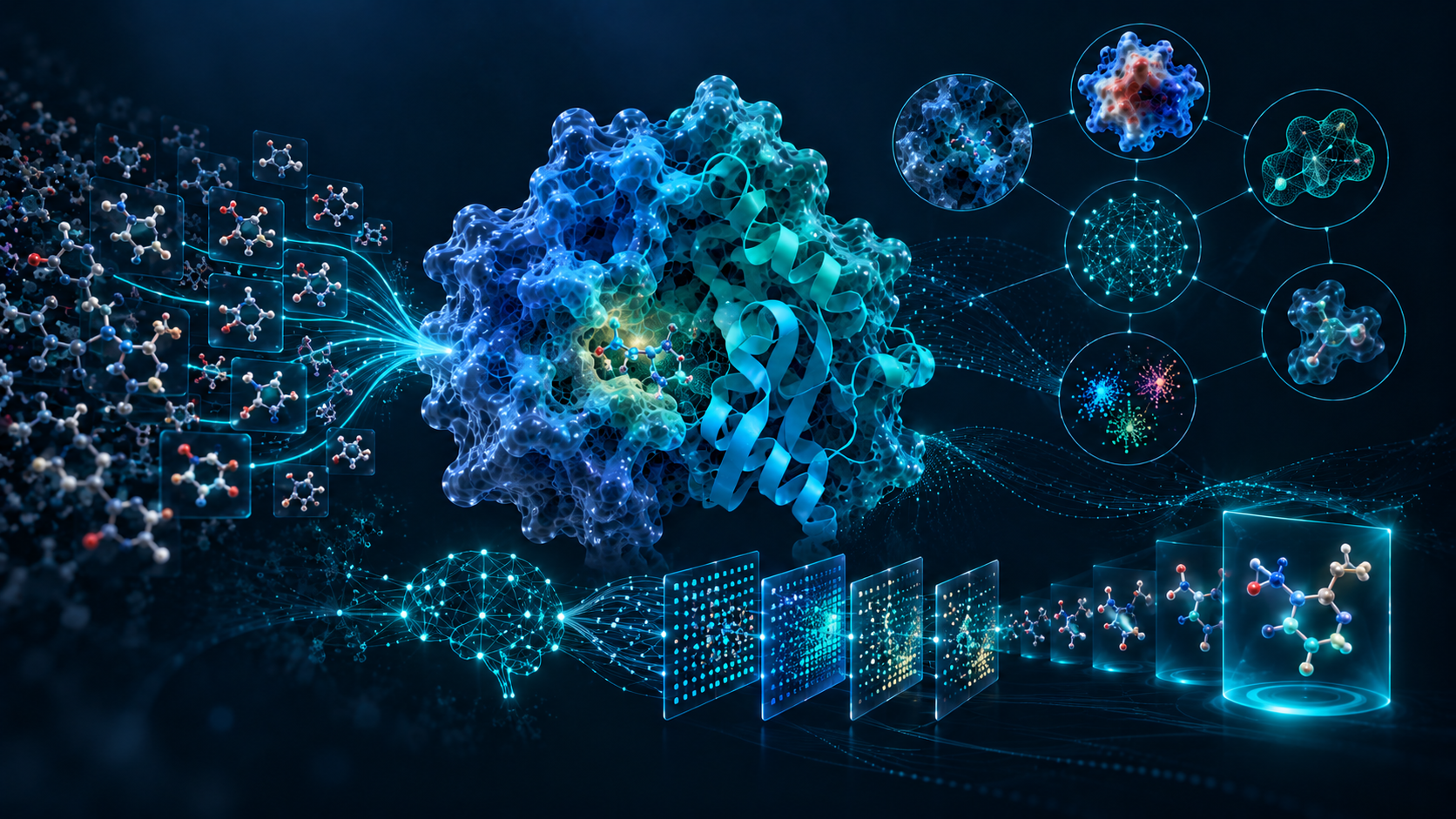
AI-Powered Drug Discovery
Drug discovery increasingly depends on the ability to analyze large and complex chemical and biological datasets.
BioNexus Discovery provides computational and AI-driven workflows that help researchers explore chemical space, identify promising candidates, predict molecular properties, and prioritize compounds for further investigation.
Our approach combines established computational methods with machine learning and interpretable analysis to support evidence-based decision-making throughout early-stage discovery.
Drug Discovery Capabilities
Computational tools and AI workflows designed around your research question.
Virtual Screening
Prioritize promising compounds from large chemical libraries to focus experimental effort.
ADMET Prediction
Rank compounds using physicochemical features and model-derived evidence to support early developability assessment.
Molecular Property Prediction
Estimate stability, permeability, potency, solubility, and other key molecular properties using computational models.
Lead Optimization
Support iterative compound refinement with data-informed design recommendations and structure–property insights.
Molecular Docking
Use structure-aware computational analysis to investigate ligand–target interactions, binding modes, and molecular fit.
Chemical Space Analysis
Explore molecular datasets to understand structural relationships, chemical diversity, similarity, and chemical-space coverage.
AI & Machine Learning
Integrate chemical, biological, literature, and computational data using machine-learning and AI-driven workflows.
Drug Candidate Analysis
Deliver clear, interpretable computational analysis to compare candidates and guide the next stage of research.
How We Work
A practical workflow built to move from data to decision with clarity and speed.
Understand the Target
Define the biological context, discovery objectives, computational requirements, and research constraints.
Model & Screen
Apply AI, machine learning, molecular modeling, and computational methods to identify and prioritize promising candidates.
Interpret & Refine
Translate computational results into scientifically meaningful insights and refine the research strategy.
From Data to Discovery Decisions
From computational analysis to practical research decisions.
Better Candidate Prioritization
Focus resources on the most promising compounds.
Interpretable AI
Understand why computational models produce their predictions.
Integrated Analysis
Connect chemical, biological, structural, and computational evidence.
Research-Ready Insights
Generate outputs that support the next stage of investigation.
Frequently Asked Questions
Common questions about our AI-powered drug discovery and computational research services.
Bring your question. We’ll help turn it into decision-ready insight.
Share your target, dataset, or discovery challenge, and we’ll recommend the right computational workflow for your project.